

Eichler / Mid-Century
Eichler and mid-century modern homes in Silicon Valley.
I'm a San Jose realtor who specializes in Eichlers and other mid-century modern homes. I help buyers find them and sellers preserve what makes them worth caring about.
“Once they're gone, they're gone.”
“Once they're gone, they're gone.”
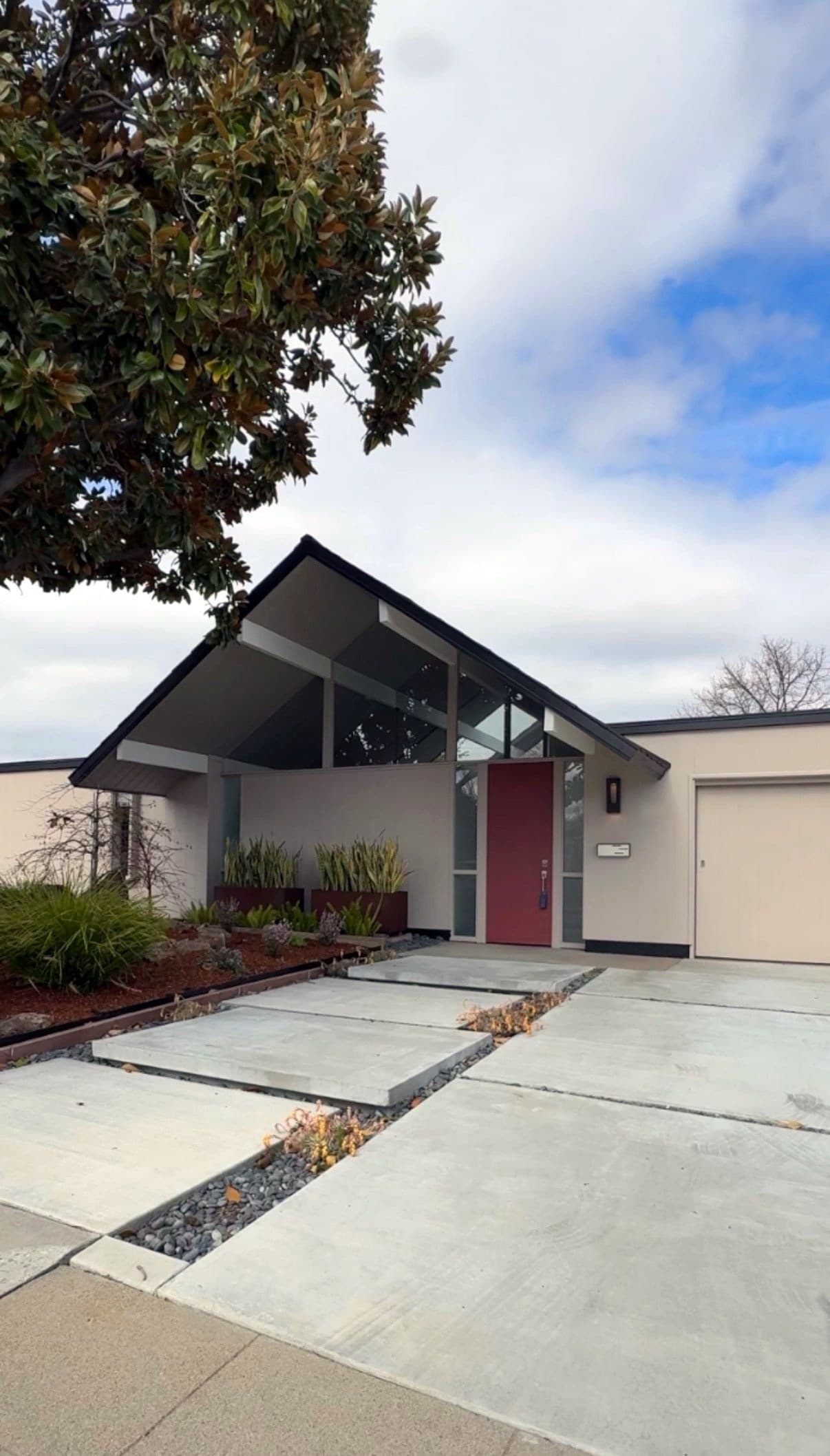
Around 11,000 Eichlers were built in California between 1949 and 1974. About 1,100 of them sit in Sunnyvale alone — the largest concentration in the South Bay. Once they're gone, they're gone. No new Eichlers are being built, which is why every renovation decision matters — for owners, for buyers, and for the community.
These homes have a devoted following because of it. In Silicon Valley's most competitive neighborhoods, well-preserved MCM homes often draw multiple offers and sell above comparable homes nearby. The buyers aren't just shopping for square footage — they're buying into a lifestyle, an architectural lineage, and a kind of living that's hard to find anywhere else.
Is it an Eichler?
Plenty of houses look like Eichlers. A true Eichler was built by Joseph Eichler's company, and the paper trail can prove it: the original building permit often names Eichler Homes as the builder, and the county assessor's record gives the year built and the tract.
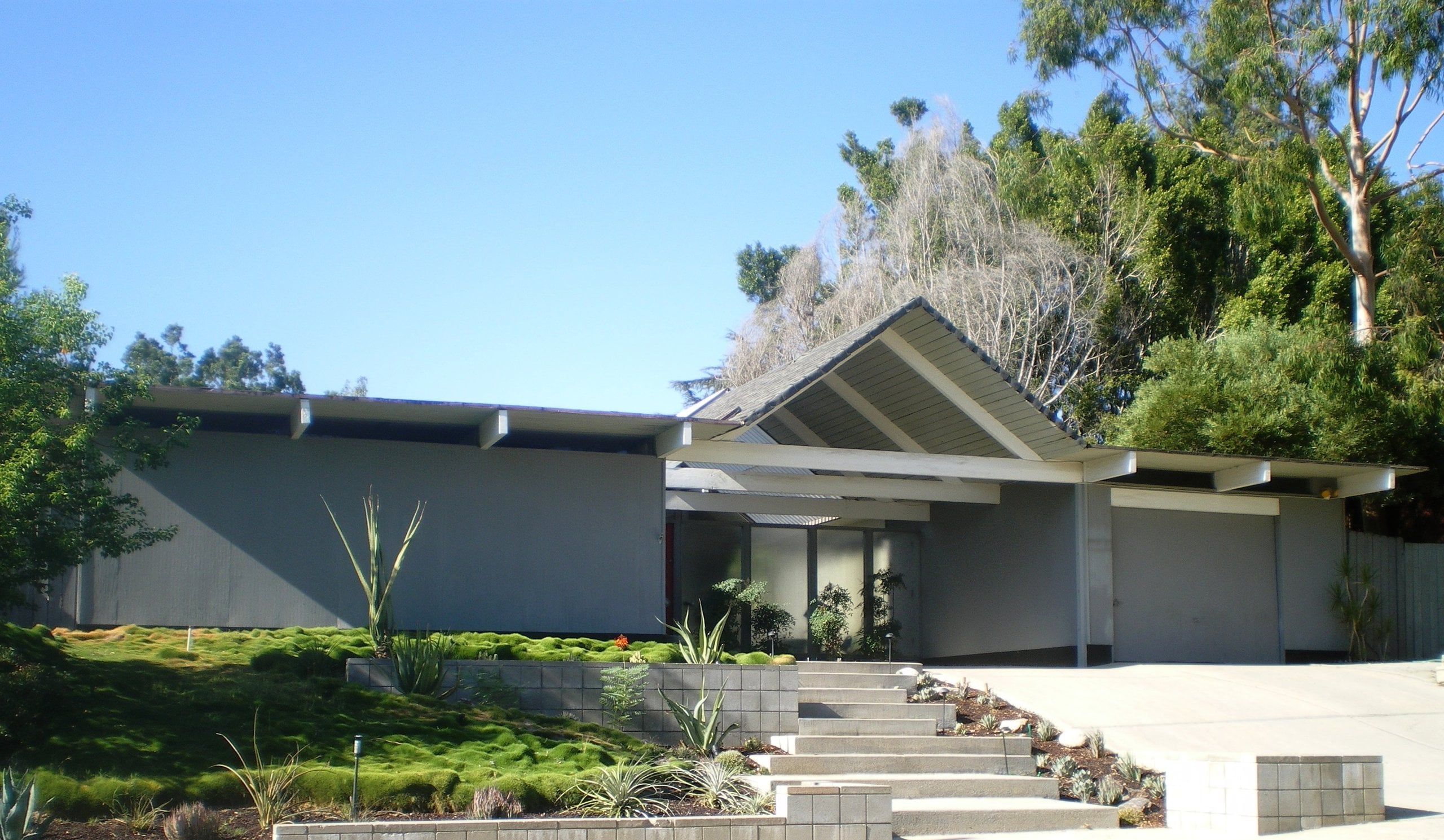
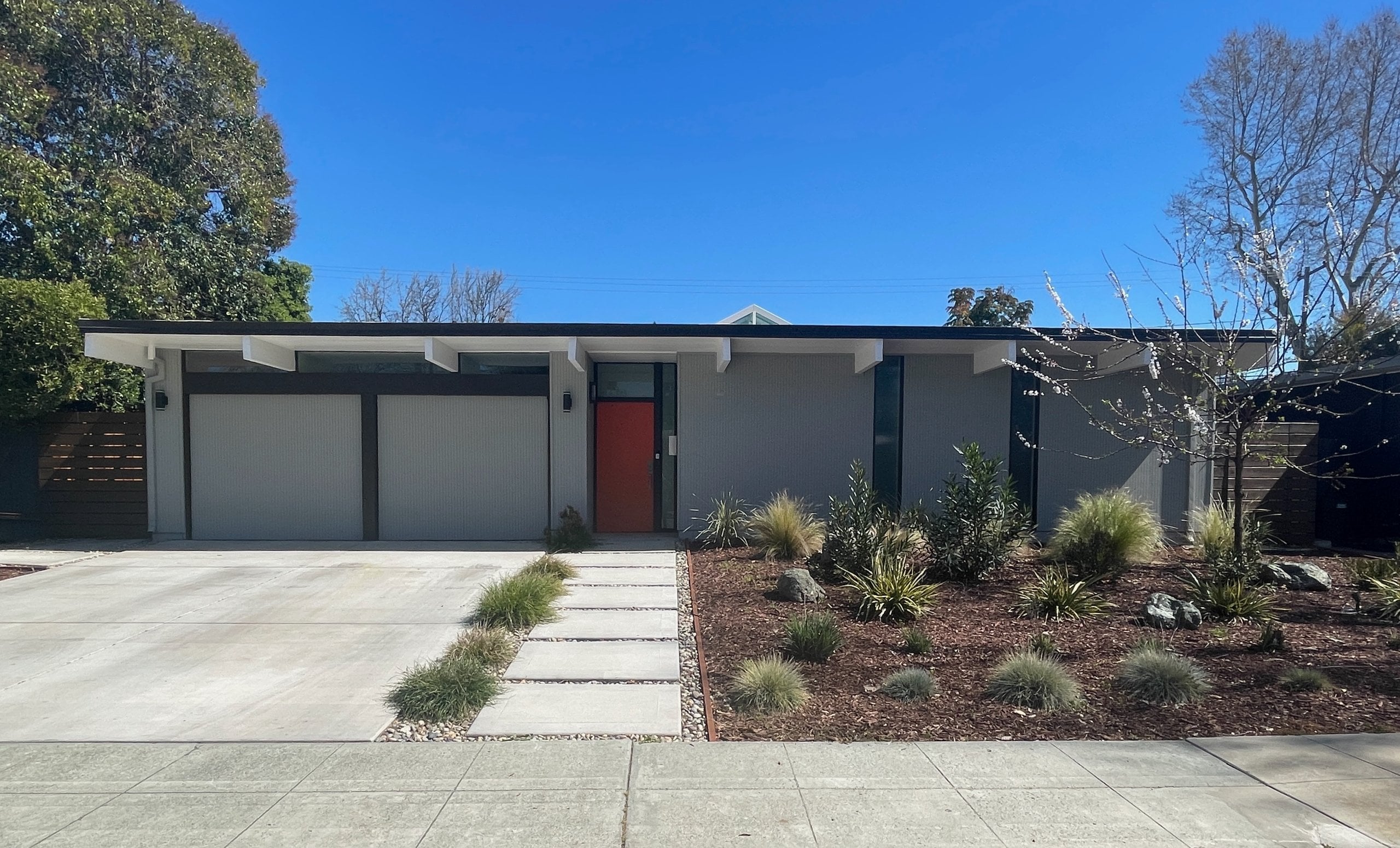
- Post-and-beam structure with exposed beams
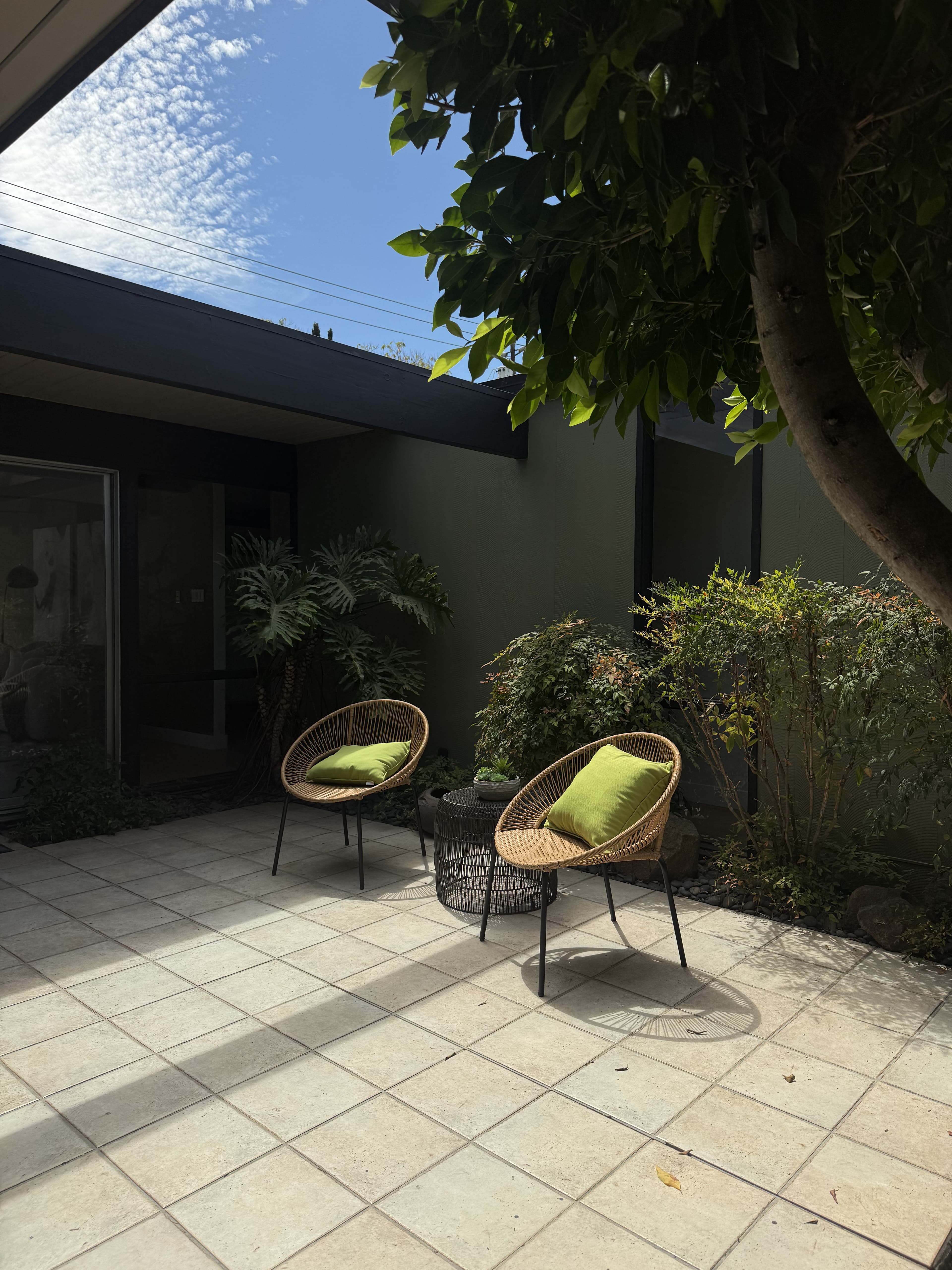
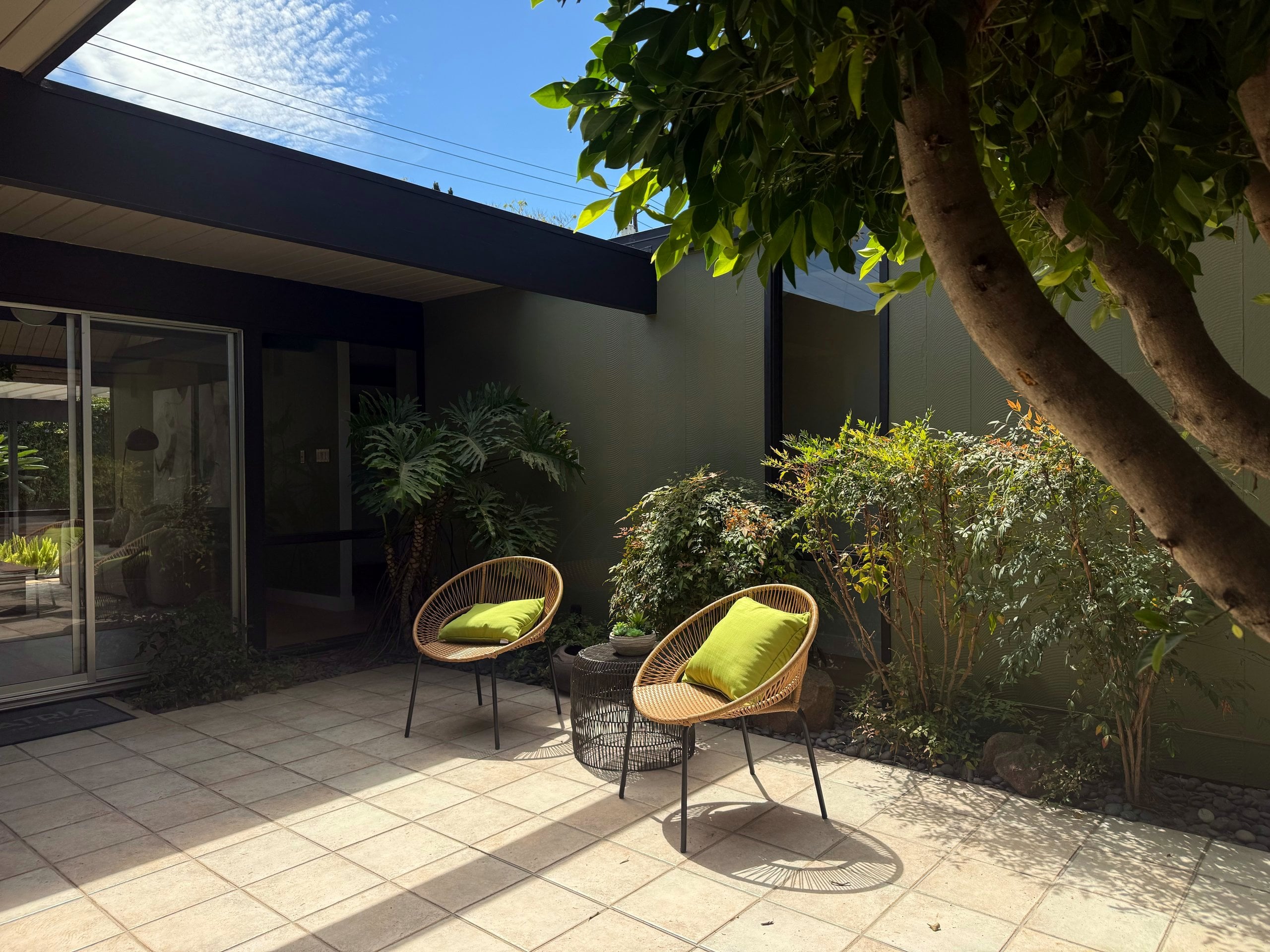
- Floor-to-ceiling glass facing the yard or atrium
- Concrete slab floor with radiant heat
- Flat or low-slope roof, no attic
- A mostly windowless wall facing the street
- Grooved vertical siding outside, mahogany paneling inside
Eichler vs. Mackay
- Builder
- EichlerJoseph Eichler's company, 1949–1974MackayJohn Calder Mackay's Mackay Homes, mostly the 1950s
- Architects
- EichlerAnshen & Allen; later Jones & Emmons and Claude OaklandMackayAnshen & Allen designed for Mackay too
- Where
- EichlerPalo Alto, Sunnyvale, San Jose, Cupertino, Mountain ViewMackaySanta Clara, Mountain View (Monta Loma), Palo Alto
Beyond Eichler: Bay Area mid-century
Eichler is the best-known name, but the Bay Area has its own modernist tradition, from architect-designed custom homes in the hills to Wurster's houses in Santa Cruz and Mark Mills' organic homes in Carmel.
The Bay Region Style
In 1947 the critic Lewis Mumford gave Northern California's modernism a name in The New Yorker: the Bay Region Style. He described a native, humane modernism that paired modern forms with local wood, the landscape, and an easy informality, rooted in Bernard Maybeck's work and carried forward by William Wurster.
Architects to know
Frank Lloyd Wright
1867–1959
Organic architecture; his modest Usonian homes are shaped around their sites. The Hanna House was the first plan he built on a hexagonal grid.
Where: The Hanna–Honeycomb House on the Stanford campus (1937), a National Historic Landmark; the Walker House in Carmel
William Wurster
1895–1973
Simple, unpretentious wood houses built for indoor-outdoor living; a leading figure of the Bay Region Style.
Where: Around the Bay Area, and early houses at Pasatiempo in Santa Cruz (1930s)
Joseph Esherick
1914–1998
Hundreds of houses rooted in regional tradition and the site; AIA Gold Medal, 1989.
Where: The Bay Area, and cluster houses at Sea Ranch
Jack Hillmer
1918–2007
Meticulously hand-crafted redwood modernist homes.
Where: Belvedere, Berkeley, and Napa
Roger Lee
1920–1981
More than 100 residences plus civic and commercial work; a pioneer of Bay Area modernism.
Where: The Bay Area and across the West Coast
Mark Mills
1921–2007
Frank Lloyd Wright apprentice whose organic homes in wood, glass, stone, and poured concrete answer to the site.
Where: Carmel and the Monterey coast
Where to find mid-century homes beyond Eichler
Peninsula
Beyond the Eichlers, the Peninsula has Mackay's modern tract homes and Frank Lloyd Wright's Hanna House on the Stanford campus.
Sunshine Glen (Mackay) · Ross Park (Mackay) · Monta Loma (Mackay) · Stanford
South Bay
Santa Clara holds some of the best-kept Mackay neighborhoods, including an AIA award-winning tract from the early 1950s.
Maywood Park · Fairmede · Sunshine Meadows
East Bay
Berkeley and the East Bay hills are home to custom Bay Region Style houses by architects like Jack Hillmer, John Funk, and William Wurster.
Berkeley hills · Oakland hills
Santa Cruz & the coast
Pasatiempo in Santa Cruz has early Wurster houses with Thomas Church landscapes. Carmel has Mark Mills' organic homes and Wright's Walker House.
Pasatiempo · Carmel · Carmel Highlands
The short inspection checklist
What to check on any Eichler before you remove contingencies.
- 1Radiant heat pressure test, and identify copper vs. steel pipe
- 2Roof inspection: material, age, insulation, and permits
- 3Sewer line camera scope
- 4Pest and dry-rot inspection, especially exposed beam ends
- 5Asbestos testing before any flooring or ceiling work
- 6Windows and sliders: condition, single vs. dual pane
- 7Atrium and roof drainage
- 8Electrical panel and wiring
- 9Permit history for past additions and remodels
Questions, answered
The basics
What is an Eichler home?
A mid-century modern tract home built by developer Joseph Eichler's company in California, mostly in the Bay Area, between 1949 and 1974. They're known for post-and-beam construction, walls of glass facing private yards, radiant heat in the floor slab, and, in later models, an open-air atrium at the center of the house.
Who was Joseph Eichler?
Joseph Eichler (1900–1974) was a developer who hired progressive modernist architects to design homes for middle-class families, something builders of his era almost never did. He sold his company in 1966 but kept building until his death in 1974.
He also sold homes to buyers of any race or religion. In 1958 he resigned from the National Association of Home Builders when it declined to support a non-discrimination policy.
Who designed Eichler homes?
Robert Anshen of Anshen & Allen designed the first Eichlers in 1949. Later homes came from Claude Oakland & Associates in San Francisco and Jones & Emmons in Los Angeles, among others.
How many Eichlers are there, and where?
About 11,000 were built in California, most of them in the Bay Area. Palo Alto has the most of any city, about 2,700, followed by Sunnyvale, with more in San Jose, Mountain View, and Cupertino.
Buying and owning
How does radiant heating work, and what goes wrong?
Hot water from a boiler runs through pipes cast into the concrete slab and warms the floor. Earlier systems used steel tubing, much of which corroded; later Eichlers used copper.
Leaks in copper systems can usually be repaired. Corroded steel systems generally can't be saved, so the heat has to be replaced, with options like a new in-slab system, radiant panels over the slab, ductless mini-splits, baseboards, or a rooftop unit. Before you buy, have a radiant specialist pressure-test the system and identify the pipe.
What should I know about Eichler roofs?
There's no attic: the roof is the exposed wood ceiling with waterproofing on top. The originals had very little insulation under tar and gravel, so the homes ran hot and cold.
Many owners reroof with spray foam, which insulates and waterproofs in one layer and gets a protective coating that needs periodic renewal. Ask the seller for the roof's age, material, permits, and recoat history.
Should the original single-pane glass be replaced?
Original single-pane glass loses heat in winter and gains it in summer. Dual-pane or low-e glass makes the house more comfortable; the trick is keeping the slim original frame profiles.
Do Eichlers have asbestos or lead paint?
Homes of this era can. Original vinyl floor tile and the black adhesive under it often contain asbestos, and homes built before 1978 come with federal lead-paint disclosure rules. Test before you sand, remove, or disturb old materials, and use licensed professionals for abatement.
Which updates help an Eichler, and which hurt it?
The ones that hurt most are hard to undo: painting over exposed beams, tongue-and-groove ceilings, or the original mahogany paneling, and all-white remodels that strip out the warmth. Once wood is painted, it's painted for good.
The ones that help keep the character and fix the problems: restoring paneling, repairing the post-and-beam structure, and upgrading the roof, glass, and heating in ways that keep the original lines. Buyers who seek out Eichlers notice the difference.
What about the exposed beams?
Beams that run past the roof edge face the weather. Once the paint wears through they can crack, absorb moisture, and develop dry rot or termites. Rot confined to the ends can often be repaired without replacing the whole beam.
Rules and permits
What does it mean that some Eichler tracts are on the National Register?
Green Gables and Greenmeadow in Palo Alto were listed as historic districts in 2005, and San Jose's Fairglen Additions in 2019. Listing is mainly recognition; what you can change is controlled by local rules.
Can I add a second story or an ADU?
It depends on the city. Several Palo Alto Eichler neighborhoods have voted in single-story overlays that bar second stories, and Cupertino's Fairgrove tract has Eichler zoning with a single-story limit. Sunnyvale reviews Eichler additions under design guidelines.
What's allowed comes down to the city and the specific lot, so it's worth checking before you buy. It's one of the first things we'd look into together.
A poorly renovated Eichler often sells for less than a thoughtfully preserved one. The buyers who seek out these homes are buying authenticity. The smart move — whether you're selling or staying long-term — is to know which updates add value and which ones erase it.
If you're buying
I'll help you spot the line between “lovingly updated” and “stripped of character.”
If you're selling
I'll help you decide what to prep, what to update, and what to leave as-is.
Eichler neighborhoods
Every Eichler neighborhood, tract by tract: the Peninsula and South Bay, where Eichler started, plus the East Bay, Marin, San Francisco, Sacramento, and Southern California.
Peninsula
Palo Alto (27) · Menlo Park · Redwood City · Ladera · San Mateo · Mountain View
South Bay
Sunnyvale (6) · Cupertino · San Jose (4) · Santa Clara (2)
East Bay
Walnut Creek (2) · Concord · Castro Valley · Oakland
North Bay
San Rafael · Marin County · Mill Valley
San Francisco
San Francisco
Sacramento
Sacramento
Southern California
Granada Hills · Thousand Oaks
Mid-century glossary
The words you'll hear touring Eichlers and other mid-century homes, from post-and-beam to single-story overlays.
Further reading
- Eichler Network
The long-running resource for Eichler and mid-century owners: articles, a forum, and a contractor directory.
- Eichler: Modernism Rebuilds the American Dream
Paul Adamson and Marty Arbunich, with photography by Ernest Braun (Gibbs Smith, 2002).
- Docomomo US, Northern California
Modernist preservation news, tours, and architect features.
- Hanna–Honeycomb House (National Park Service)
Frank Lloyd Wright's first Bay Area work, on the Stanford campus.
Get the Eichler buyer's guide
What to look for, common issues, and what to pay.
Ask me an Eichler or mid-century question
I'll answer you directly. Good questions may be added to this page, without your name.